


Office Information:
Office Hours:
Contact us to schedule an appointment.Address:
1905 Cherry Hill DrSuite 200
Columbia, MO 65203
Phone Numbers:
Phone: 573-445-3903Phone: 573-445-3904
Directions/Map

- What is ADD/ADHD?
- What is a qEEG?
- Sites
- Articles

Symptoms of ADD/ADHD
The symptoms of attention deficit hyperactivity disorder (ADHD) include:
Inattention, which is having a short attention span and being easily distracted.
Impulsivity, which can cause a person to do dangerous or unwise things without thinking about the consequences.
Hyperactivity, which is inappropriate or excessive activity.
These symptoms affect people in all age groups who have ADHD. But typical behavior varies by age.
In preschool-age children, symptoms may be hard to identify. Normal behavior in young children periodically includes all of the major symptoms. ADHD is distinguished from normal behavior by the severity and consistency of symptoms.
Children between the ages of 6 and 12 usually show more obvious signs of ADHD than other age groups. School expectations can make symptoms more noticeable. For some children, school is the first setting where academic performance and socialization abilities are assessed. However, it often is more difficult to detect ADHD when inattention is the primary symptom and the child is otherwise well-behaved.
The presence of ADHD may be indicated by:
Low grades or test scores, including achievement tests.
Poor organization and study skills.
Socialization problems and feeling rejected by peers.
Problems with self-esteem.
Teens between the ages of 13 and 18 may be in better control of disruptive behavior related to hyperactivity. Other problems that began in earlier years may continue or become worse when ADHD is not treated. Teens with inattention problems who previously managed to cope may start to fall behind in schoolwork. This is especially true when major changes occur, such as starting at a new school or going to college.
Symptoms of ADHD in adults may not be as noticeable. Many adults with ADHD have not been diagnosed and treated. These people can develop problems such as depression and difficulty maintaining a job.
There are several other conditions with symptoms similar to ADHD. For example, sometimes bipolar disorder and ADHD can be confused. It can be difficult to determine whether symptoms are caused by ADHD, another condition, or both.
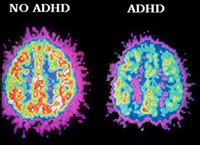
Positive Traits of AD/HD
Most descriptions of AD/HD focus on the negative aspects and neglect to mention the advantages to having AD/HD. They include:
- Artistic
- Creativity
- Sport Talented
- High Energy
- Driving
- Intuitiveness
- Life of the Party
- Resourcefulness
- Talkative
- Tenacity
- Forgiving attitude (sometimes too much so)
- Warm-heartedness
- Trusting Attitude (sometimes too much so)
- Ability to take risks (sometimes too risky)
- Sensitivity
- Flexibility
- Loyalty
- Good sense of humor
(Source: Hallowell Center)
What is a qEEG?
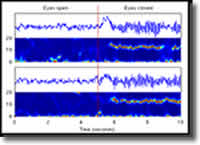
A qEEG is a diagnostic procedure that is noninvasive and has no radiation. Other types of EEG's are used to diagnose seizure disorders and use light stimulation as part of the procedure. At times, doctors even induce hyperventilation. The qEEG does not use these techniques that stress the brain.
The examinations is approximately 94% sensitive (picks up ADD/ADHD & LD) and 94% specific (differentiates between disorders and non-disorder groups) (Snyder & Hall). This is comparable to other procedures such as MRI scans and rapid Step tests.
The scan entails placing an electrode cap (like a bathing cap with sensors) on the head to pick-up small voltages that are emitted by the brain. The procedure takes about 45- 60 minutes.
Quantitative EEG can play an important role in the evaluation and treatment of children and adolescents with Attention Deficit/Hyperactivity and Learning Disorders. Children with Learning Disorders (LD) or a mix LD and ADD/ADHD are often identified by these scans, thus helping and refining psychological (Cognitive/Behavioral) and medication therapies. EEG slowing is the most common abnormal finding, and the nature of the QEEG abnormality may be related to future academic performance. QEEG shows high sensitivity and specificity for distinguishing normal children and children with learning disorders and attention disorders from each other and may provide useful information for determining the likelihood that children with attention problems will respond to treatment with stimulant medication.
The bulk of QEEG research into child and adolescent psychiatric disorders has been done with ADHD. Multiple QEEG studies have demonstrated a pattern of electrophysiological abnormality among individuals with this disorder. Discriminant function analysis using QEEG variables has shown very high levels of sensitivity and specificity in identifying ADHD participants in several studies. In fact, in two studies, a single ratio of theta/beta power recorded from a single site resulted in sensitivity levels of 86% and 90% and specificity levels of 94% and 98%. A recently completed blinded multi-center study of 159 subjects showed that qEEG was far more accurate in identifying those subjects who had ADHD than the much more commonly used parent and teacher rating scales. qEEG identified ADHD with a sensitivity of 87% (87% of those who had ADDHD were correctly found to have it by the qEEG) and a specificty of 94% (94% of those who did not have ADHD were correctly found not to have it by the qEEG).
Below are some sites that are good resources on ADD/ADHD and qEEG
:
Below are some sites that are good resources on ADD/ADHD and qEEG :
- The Role of qEEG in Child and Adolescent Psychiatric Disorders--A Review
- Duke University's Review on qEEG and ADD/ADHD
- Research Support for the qEEG as an Diagnostic Aid for ADD/ADHD
- QEEG Neurometrics and Differential Diagnosis of ADHD
- A Meta-analysis of Quantitative EEG Power Associated With Attention-Deficit Hyperactivity Disorder
- Specificity of Quantitative EEG Analysis in Adults with Attention Deficit Hyperactivity Disorder
- The clinical role of computerized EEG in the evaluation and treatment of learning and attention disorders in children and adolescents.
- Quantitative EEG in children with learning disabilities
- Emerging Interventions
- Quantitative Electroencephalography (QEEG) and Neuropsychological Syndrome Analysis
- A meta-analysis of quantitative EEG power associated with attention-deficit hyperactivity disorder.
- Specificity of quantitative EEG analysis in adults with attention deficit hyperactivity disorder.
- Blinded, multi-center validation of EEG and rating scales in identifying ADHD within a clinical sample.
- Comparison of a standard psychiatric evaluation to rating scales and EEG in the differential diagnosis of attention-deficit/hyperactivity disorder.
- Review of clinical validation of ADHD behavior rating scales.
- Utility of the electroencephalogram in attention deficit hyperactivity disorder.
- Girls with attention-deficit/hyperactivity disorder: EEG differences between DSM-IV types.
- Behavioural differences between EEG-defined subgroups of children with Attention-Deficit/Hyperactivity Disorder.
- Assisted diagnosis of attention-deficit hyperactivity disorder through EEG bandpower clustering with self-organizing maps.
- Comparison of a parent-rated DSM-IV measure of attention-deficit/hyperactivity disorder and quantitative EEG parameters in an outpatient sample of children.
- The neurophysiology of attention-deficit/hyperactivity disorder.
- The clinical role of computerized EEG in the evaluation and treatment of learning and attention disorders in children and adolescents.
- The usefulness of quantitative EEG (QEEG) and neurotherapy in the assessment and treatment of post-concussion syndrome.
- The development of a quantitative electroencephalographic scanning process for attention deficit-hyperactivity disorder: reliability and validity studies.
- Quantitative electroencephalography and attention-deficit/hyperactivity disorder: implications for clinical practice.
- Sensitivity and specificity of QEEG in children with attention deficit or specific developmental learning disorders.
- Quantitative electroencephalography coherence and dipole source index during various cognitive tasks in children with attention deficit hyperactivity disorder.
- Concurrent validity of the pediatric attention disorders diagnostic screener for children with ADHD.
- A review of the validity of laboratory cognitive tasks used to assess symptoms of ADHD.
- Does the Conners' Continuous Performance Test aid in ADHD diagnosis?
- The utility of a continuous performance test embedded in virtual reality in measuring ADHD-related deficits.
- QEEG and EEG Biofeedback Fact Sheet
- QEEG Brainmapping in ADHD
- Neurofeedback/ Quantitative EEG for ADHD diagnosis
- Sensitivity and Specificity of QEEG
- History of the scientific standards of QEEG normative database
- Clinical utility of EEG in attention deficit hyperactivity disorder.
- Quantitative EEG in low-IQ children with attention-deficit/hyperactivity disorder.
- Childhood EEG as a predictor of adult attention-deficit/hyperactivity disorder.
- The increase in theta/beta ratio on resting-state EEG in boys with attention-deficit/hyperactivity disorder is mediated by slow alpha peak frequency.
- EEG alpha asymmetry in schizophrenia, depression, PTSD, panic disorder, ADHD and conduct disorder.
- Decision Support Algorithm for Diagnosis of ADHD Using Electroencephalograms.
- Epileptiform abnormalities and quantitative EEG in children with attention-deficit / hyperactivity disorder